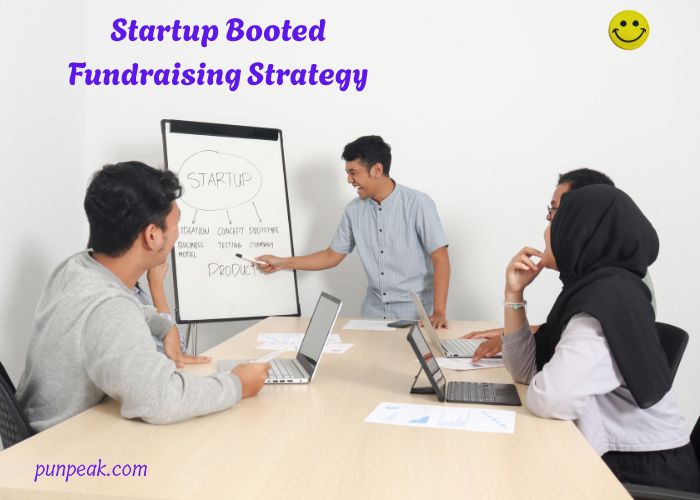
How to build, grow, and sustain your business without sacrificing ownership, control, or long‑term focus.
If you’ve ever wondered How to raise funds for a start‑up business? without giving away equity or inviting investor pressure, this is your guide. We’ll break down what startup booted fundraising strategy actually means, why it matters, and how to use it to build a sustainable startup growth engine that keeps you in control.
This isn’t fluff. You’ll get real steps, real models, and real strategies founders use to grow revenue‑first companies that survive downturns and thrive on profit.
What Is Startup Booted Fundraising Strategy?
At its core, startup booted fundraising strategy is the art of building and scaling a company with minimal external capital. Instead of seeking prompt backing from venture capitalists or angel investors, founders rely on their own resources, revenue reinvestment, and smart financial planning.
This approach blends:
- Bootstrapping
- Lean operations
- Revenue as capital
- Founder independence
In essence:
Booted fundraising means using your own cash, customers, and reinvested revenue to fund growth and sustain your business.
It answers What is bootstrapping in raising money? by proving you don’t always need outside capital to build a thriving startup.
Why Booted Fundraising Matters Today
Modern markets demand efficiency. Investors now expect hyper‑growth, fast market penetration, and large fundraising rounds. That favors companies with massive capital behind them. But not every business needs that model.
Booted fundraising empowers entrepreneurs who:
- Prioritize profitability before expansion
- Value founder control over equity
- Build sustainable companies that withstand market cycles
- Avoid investor‑driven pressure and dilution
In a world of high burn‑rate startups, this strategy lets you:
- Stay flexible
- Focus on real customers
- Learn from the business instead of chasing valuations
Let’s dig deeper into how it works and why it’s powerful.
The Core Philosophy Behind Booted Fundraising
At its heart, booted fundraising challenges traditional assumptions about startup funding. It starts with a simple premise:
Revenue funds growth. Not investors.
This philosophy transforms the way founders think about capital. Instead of betting on future valuation, you build from what you can earn today.
Here’s how the mindset shifts:
| Traditional VC Thinking | Booted Fundraising Mindset |
|---|---|
| Raise capital early | Generate revenue early |
| Focus on valuation | Focus on profitability |
| Burn money to scale | Use revenue to grow |
| Investors drive strategy | Customers drive strategy |
| Rapid scaling | Sustainable, controlled growth |
| High risk | Managed financial risk |
This table shows the shift from investor‑oriented growth to customer‑oriented growth the essence of a solid startup funding strategy rooted in discipline, awareness, and smart execution.
When Startup Booted Fundraising Strategy Is the Right Choice
Not every startup should start with booted fundraising, but most should consider it. It works especially well when:
✔ You can launch with a small initial investment
Digital products, service businesses, and software platforms often need limited overhead.
✔ Your market lets you reach customers quickly
Businesses with fast sales cycles and direct customer monetization thrive here.
✔ You value founder ownership and decision‑making
If you want full control over your company’s vision and path, this strategy keeps you independent.
✔ You prefer sustainable growth to hyper‑scale at all costs
Booted companies often build resilience, adaptability, and long‑term profitability.
To quickly assess fit, ask yourself:
- Can I build an MVP with minimal funds?
- Do early customers exist who’ll pay now?
- Do I want 100% control of my company?
If you answered yes to most of these, booted fundraising could be your most effective path.
How Startup Booted Fundraising Strategy Works (Step by Step)
This strategy breaks down into practical, actionable phases:
1. Validate With a Minimum Viable Product (MVP)
Before anything else:
- Build the smallest version of your product that solves a real problem.
- Test demand with pre‑orders, waitlists, or service offerings.
Your goal here is validation, not perfection.
Action Steps
- Create a landing page with value propositions
- Collect email sign‑ups or deposits
- Use inexpensive tools (no‑code apps, templates)
- Conduct customer interviews
Validate before you invest.
2. Generate Initial Revenue Before Growth
Revenue becomes your first form of capital. This can be through:
- Service offerings tied to your product idea
- Premium early access
- Consulting fees
- Subscriptions
- One‑time product sales
Revenue > funding rounds in booted models.
3. Reinvest Profits Strategically
Not all profits should be reinvested.
Focus on areas that directly support:
- Customer acquisition
- Product improvement
- Operations that unlock recurring revenue
Avoid overhead that doesn’t immediately return value.
4. Optimize for Sustainable Scaling
This is where many founders trip up. Real scaling in booted fundraising comes from:
- Automating repetitive tasks
- Improving retention and lifetime value (LTV)
- Building predictable revenue systems
Growth isn’t fast by default. It’s profitable.
Practical Booted Fundraising Models That Work
Here are the real ways founders fund their startups without outside capital:
Personal Savings Bootstrapping
You use your own savings to cover early costs.
Best for:
- Solo founders
- Low initial investment ideas
- Testing markets quickly
Pros: Full control, simple process
Cons: Personal financial risk
Revenue‑Based Bootstrapping
You use revenue to fund all expenses.
This requires an early paying audience.
Best for:
- Subscription businesses
- Service + product hybrids
- SaaS with early monetization
Pros: Revenue funds growth
Cons: Requires initial customer traction
Side‑Hustle Bootstrapping
You work on your business part‑time while earning elsewhere.
Best for:
- Early stage founders
- Business ideas that don’t need full‑time focus
- Reducing financial pressure
Pros: Lower financial stress
Cons: Slower progress
Lean Bootstrapping
You keep costs minimal and prioritize efficiency.
This strategy relies on:
- Free or cheap tools
- Minimal overhead
- Outsourced work only when necessary
Pros: Maximize runway
Cons: Limited early scale
Examples of Successful Bootstrapped Startups
Many iconic companies started without outside funding. They show you can build value before fundraising or never raise at all.
Real Bootstrapped Success Stories
| Company | Bootstrapped Strategy Used | Outcome |
|---|---|---|
| Mailchimp | Revenue reinvested | Grew to multibillion valuation, acquired by Intuit |
| Basecamp | Lean bootstrapping | Consistently profitable, no VC funding |
| Spanx | Personal savings | Built global brand independently |
| Atlassian | Revenue‑first | IPO success with no early VC rounds |
| GoPro | Customer pre‑sales | Product validated with early sales |
These companies prove that bootstrapped startups can:
- Capture market share
- Build loyal customer bases
- Command high valuations without early dilution
Startup Financial Planning in Booted Fundraising
Financial discipline makes or breaks booted startups.
Three things matter most:
1. Cash Flow Management
Track where money comes from and where it goes. Use:
- Expense tracking tools
- Revenue forecasting
- Regular financial reviews
Never assume revenue will cover costs without monitoring it.
2. Budgeting Essentials
Create a budget that includes:
- Fixed costs
- Variable costs
- Emergency reserves
- Marketing and growth allocation
Having this clarity prevents overspending and supports smart decisions.
3. Emergency Funds
Every booted business should have:
3 to 6 months of operating capital saved or forecasted
This protects your startup during slow periods without needing external funding.
Marketing and Growth for Booted Fundraising Startups
Booted startups don’t have big marketing budgets. That’s an advantage.
Here’s how you grow without spending a fortune:
Low‑Cost Marketing Strategy
Focus on channels that build trust and compound over time:
- SEO & Content Marketing
- Organic Social Media
- Email List Growth
- Community Building
- Referral Programs
Each of these scales without heavy ad spend.
The Power of Word‑of‑Mouth Growth
Happy customers become your best marketers.
Real growth comes from:
- Excellent product experience
- Customer referrals
- Testimonials and reviews
This is viral growth without paid ads.
Product Development the Smart Way
Booted fundraising doesn’t mean slow innovation. It means smart innovation.
Focus on:
- Solving a single problem exceptionally well
- Gathering customer feedback early
- Iterating quickly based on real usage
This reduces wasted effort and ensures every improvement drives revenue.
Hiring Strategy That Fits Booted Fundraising
Booted founders don’t hire early just because they can.
Hiring should be:
- Strategic
- Revenue‑aligned
- Task specific
When to hire:
- When revenue justifies the role
- When a task distracts you from growth
- When automation won’t solve it
Often, startups begin with:
- Freelancers
- Remote workers
- Specialist contractors
This maintains flexibility and cost control.
Legal and Compliance Essentials
Booting a business doesn’t mean ignoring legal basics.
You need:
- Proper business registration
- Tax planning
- Contracts & agreements
- Compliance with local laws
Ignoring these can cost far more than early funding would have.
Advantages of Startup Booted Fundraising Strategy
Let’s be clear: there are real benefits:
✔ 100% Ownership and Control
You call the shots. No investor pressure. Full vision control.
✔ Strong Financial Discipline
Bootstrapped founders learn to optimize every dollar.
✔ Customer‑Driven Growth
Revenue becomes the focus, not investor metrics.
✔ Lower Risk of Collapse
No dependency on external capital cycles.
This leads to long‑term survival and sustainable startup growth a key advantage over short‑term, high‑burn models.
Disadvantages and Real Challenges
Booted fundraising isn’t easy. It comes with real trade‑offs, including:
- Slower growth
- Limited early resources
- Personal financial risk
- Scaling challenges in capital‑intensive industries
- Founder burnout from financial pressure
Make no mistake: this path demands resilience.
Booted Fundraising vs Venture Capital Funding
Let’s break down the differences so you can decide what’s right for you.
| Factor | Startup Booted Fundraising | Venture Capital Funding |
|---|---|---|
| Ownership | Founder retains full equity | Equity dilution |
| Growth speed | Controlled, slower | Fast, aggressive |
| Decision making | Founder‑led | Influenced by investors |
| Risk | Gradual, customer‑driven | High burn, investor pressure |
| Sustainability | Tends toward profitability | Depends on future rounds |
| Exit strategy | Flexible | Often tied to investor expectations |
As you can see, each path has merits. The key is choosing one that aligns with your goals.
Common Mistakes in Booted Fundraising
Booted founders often fail because they:
❌ Underestimate Business Costs
Bad budgeting leads to cash shortfalls.
❌ Avoid Growth Investments
Fear of spending can stall growth.
❌ Ignore Cash Flow Management
Without tracking, revenue becomes invisible.
❌ Expand Too Early
Growth before profitability kills many startups.
Avoiding these keeps your strategy disciplined and effective.
Psychological Challenges of Booted Founding
The mental side matters.
Booted founders face:
- Decision fatigue
- Emotional uncertainty
- Pressure without external validation
Staying motivated requires:
- Clear goals
- Milestone tracking
- Emotional support systems
This is part of startup financial planning that most founders overlook.
When to Consider External Funding
Booted fundraising doesn’t mean shutting the door on capital forever.
You might consider raising external investment when:
- You’ve proven demand and product‑market fit
- Revenue shows predictable growth
- You need speed to dominate a market
- You negotiate from a position of strength
Raising capital from strength ensures better terms and less dilution.
Measuring Success in Booted Fundraising
Metrics matter. Focus on:
- Revenue growth
- Profit margins
- Customer retention
- Lifetime value
- Cash reserves
- Operational efficiency
These tell a truer story than valuation milestones.
Tools That Support Booted Startups
The right tools make booted fundraising practical:
| Category | Tools |
|---|---|
| Accounting | QuickBooks, Wave |
| Budgeting | Notion, Excel |
| CRM | HubSpot Free, Zoho |
| Analytics | Google Analytics |
| Automation | Zapier, Integromat |
| MVP Builders | Webflow, Bubble |
Affordable or free tools reduce early costs perfect for booted strategies.
Myths About Booted Fundraising
Myth 1: Bootstrapped Startups Can’t Scale
Reality: Many bootstrapped businesses grow sustainably over time.
Myth 2: Bootstrapped Means Thinking Small
Reality: It means thinking smart and profitable.
Myth 3: Investors Won’t Care Later
Reality: Profitable startups attract better investment terms.
Booted fundraising is not a limitation it’s a strategic edge.
Global Trends Supporting Booted Fundraising
Several forces make this strategy more relevant today:
- Lower startup costs for digital products
- Remote work lowering overhead
- Access to no‑code, low‑cost tools
- Customers willing to pay early for value
- Market maturity demanding sustainable profitability
Booted fundraising isn’t just a trend it’s a sustainable response to modern startup economics.
Final Framework: The Booted Founder Playbook
Here’s the essence of the strategy:
Validate early.
Generate revenue.
Reinvest intelligently.
Protect ownership.
Scale sustainably.
This is how founders grow companies built to last.
Closing Thoughts
Startup booted fundraising strategy isn’t the easy path. It demands discipline, focus, and a relentless commitment to customers. But it’s one of the most powerful ways to build a business that’s financially sustainable, founder‑led, and resilient through economic cycles.
If you’re tired of investor pressure and want to grow on your terms, this model might be the perfect fit.
More Articles
- 7 Powerful Reasons Riproar Tech News Is The Ultimate Source For Tech Insights
- TTWeakHotel Discount Codes: The Smart Way To Save On Your Next Hotel Stay
- Domestic Nuclear Detection Office (DNDO): Role, Mission, Strategy, And Impact
Read more knowledgeable blogs on Pun Peak

Alex Simmonds is the wit behind the words at Alex Simmonds, where laughter takes center stage. With a sharp eye for puns and a playful sense of humor, Alex crafts clever jokes and chuckle-worthy content that tickles funny bones across the web. Whether it’s a quick one-liner or a perfectly timed pun, Alex knows how to turn everyday moments into punchlines. When not writing, you’ll find him chasing giggles, mastering dad jokes, or dreaming up the next viral laugh.