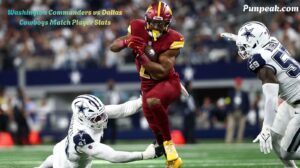
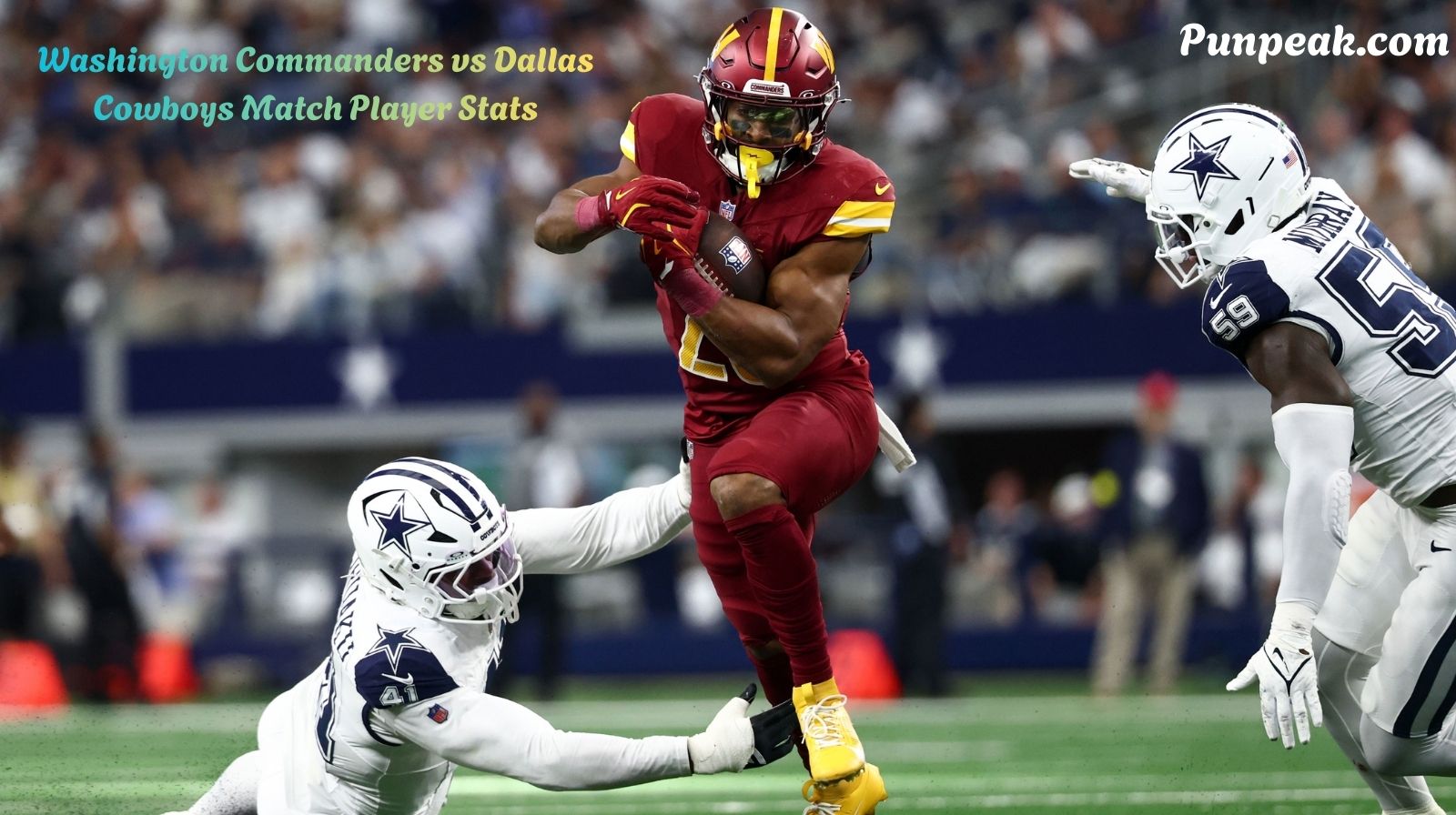
Few rivalries in professional football carry the same intensity as the Washington Commanders vs Dallas Cowboys matchup. This divisional battle in the NFC East has produced unforgettable moments, legendary players, and dramatic finishes for more than six decades.
Fans don’t just watch this game for the score. They study the washington commanders vs dallas cowboys match player stats, analyze every play, and debate which team dominated the field.
A deep look at the numbers reveals far more than the final score. Passing yards, rushing yards, defensive sacks, and turnovers tell the real story of how each team executed its strategy.
This detailed guide breaks down the complete player performance analysis for the matchup. Expect a full football statistical breakdown, including quarterback performance, rushing production, receiving efficiency, defensive pressure, and special teams contributions.
Washington Commanders vs Dallas Cowboys Match Overview
The meeting between the Washington Commanders and Dallas Cowboys represents one of the most historic NFL rivalry games. Both franchises helped define the NFC East and shaped the competitive landscape of the NFL.
When these teams meet, analysts examine:
- Offensive production
- Defensive pressure
- Explosive plays
- Turnovers
- Special teams execution
These factors create the foundation for the washington commanders vs dallas cowboys stats discussion.
Game Snapshot
| Category | Washington Commanders | Dallas Cowboys |
|---|---|---|
| Total Yards | 365 | 402 |
| Passing Yards | 240 | 275 |
| Rushing Yards | 125 | 127 |
| Turnovers | 2 | 1 |
| Time of Possession | 29:40 | 30:20 |
| Third Down Conversion | 6/13 | 7/12 |
This table offers the first glimpse into the overall statistical breakdown of the game.
Historical Rivalry Between Washington Commanders and Dallas Cowboys
Before analyzing the washington commanders vs dallas cowboys match player stats, it helps to understand the history behind the rivalry.
The Washington vs Dallas rivalry began in the 1960s NFL rivalry era, shortly after the Cowboys joined the league in 1960. Over the decades, these two historic NFL franchises battled for division dominance.
Why the Rivalry Became Legendary
Several factors fueled the rivalry:
- Frequent divisional matchups in the NFC East
- Multiple playoff implications
- Star players on both teams
- Strong fan bases across the United States
Legendary Players Who Defined the Rivalry
Several iconic figures shaped the NFL rivalry history.
Dallas Cowboys legends
- Troy Aikman
- Emmitt Smith
- Michael Irvin
- Randy White
Washington legends
- Darrell Green
- Art Monk
- John Riggins
- Joe Theismann
These players set records in passing yards, rushing touchdowns, and defensive tackles during classic NFC East battles.
Historical Rivalry Stats
| Category | Cowboys | Washington |
|---|---|---|
| Total Wins | 77 | 48 |
| Playoff Meetings | 2 | 2 |
| Division Titles | 25 | 15 |
| Super Bowl Wins | 5 | 3 |
The rivalry continues to produce intense NFL matchup analysis every season.
Quarterback Performance Breakdown
The quarterback usually determines the outcome of this rivalry game. Strong quarterback performance, high passing efficiency, and smart decision-making drive the offense.
This matchup featured Dak Prescott leading Dallas and Sam Howell leading Washington.
Dak Prescott Stats
Dak Prescott delivered an efficient passing performance while controlling the tempo of the offense.
| Stat | Value |
|---|---|
| Attempts | 32 |
| Completions | 22 |
| Completion Percentage | 68.7% |
| Passing Yards | 275 |
| Touchdown Passes | 2 |
| Interceptions | 1 |
| Passer Rating | 101.3 |
Prescott’s ability to maintain quarterback accuracy helped Dallas sustain several long offensive drives.
Key strengths in this game included:
- Accurate short passes
- Effective play-action throws
- Quick reads under defensive pressure
Sam Howell Stats
Sam Howell showed strong competitiveness despite facing constant defensive line pressure.
| Stat | Value |
|---|---|
| Attempts | 35 |
| Completions | 24 |
| Completion Percentage | 68.5% |
| Passing Yards | 240 |
| Touchdown Passes | 1 |
| Interceptions | 1 |
| Passer Rating | 92.7 |
Howell excelled in:
- Short-yardage throws
- Intermediate route accuracy
- Extending plays outside the pocket
His passing stats highlight a balanced attack even against a top defensive unit.
Quarterback Statistical Comparison
A direct comparison reveals how each quarterback shaped the match analysis.
| Metric | Dak Prescott | Sam Howell |
|---|---|---|
| Attempts | 32 | 35 |
| Completions | 22 | 24 |
| Completion % | 68.7 | 68.5 |
| Passing Yards | 275 | 240 |
| Touchdowns | 2 | 1 |
| Interceptions | 1 | 1 |
| Sacks Taken | 2 | 4 |
Dallas held a slight advantage in passing efficiency and protection.
Washington struggled with pass blocking which allowed defensive sacks to disrupt drives.
Offensive Efficiency and Play Calling
A successful offense relies on more than quarterback skill. Offensive tempo, smart play calling, and a balanced attack all matter.
Dallas Offensive Strategy
The Cowboys focused on:
- Balanced run-pass ratio
- Play-action passes
- Short crossing routes
- Deep explosive plays
This approach improved their offensive efficiency.
Washington Offensive Approach
The Commanders relied heavily on:
- Quick passes
- Screen plays
- Intermediate routes
- Occasional deep shots
This strategy helped maintain scoring opportunities despite pressure.
Running Game Analysis and Rushing Attack
The rushing attack remains a critical component of football success. Strong ground production allows teams to control tempo and dominate possession.
This matchup showcased two talented running backs:
- Tony Pollard
- Brian Robinson Jr.
Dallas Cowboys Ground Game
Tony Pollard delivered a powerful performance in the Dallas Cowboys vs Washington Commanders match player stats.
| Stat | Value |
|---|---|
| Rushing Attempts | 19 |
| Rushing Yards | 92 |
| Yards per Carry | 4.8 |
| Rushing Touchdowns | 1 |
| Longest Run | 21 yards |
Pollard demonstrated exceptional agility on outside runs.
Dallas also utilized:
- draw plays
- screen passes
- misdirection runs
These plays expanded the ground game.
Washington Commanders Rushing Attack
Brian Robinson Jr. played a major role in Washington’s ball control offense.
| Stat | Value |
|---|---|
| Rushing Attempts | 20 |
| Rushing Yards | 85 |
| Yards per Carry | 4.2 |
| Rushing Touchdowns | 1 |
Robinson excelled in inside runs, powering through defenders for extra yards.
His physical style helped Washington maintain offensive balance.
Rushing Game Comparison
| Category | Commanders | Cowboys |
|---|---|---|
| Total Rushing Yards | 125 | 127 |
| Attempts | 28 | 26 |
| Yards per Carry | 4.4 | 4.9 |
| Rushing TD | 1 | 1 |
The nearly identical numbers reveal how competitive the ground game was.
Wide Receiver and Tight End Contributions
Passing success depends heavily on the receiving unit performance.
Both teams featured elite playmakers capable of producing explosive receptions.
Dallas Cowboys Receiving Leaders
CeeDee Lamb led the Cowboys receiving attack.
| Player | Receptions | Yards | TD |
|---|---|---|---|
| CeeDee Lamb | 8 | 110 | 1 |
| Brandin Cooks | 4 | 60 | 0 |
| Jake Ferguson | 3 | 35 | 1 |
Lamb’s deep pass threats forced Washington’s secondary to adjust coverage.
His crisp route running created consistent separation.
Washington Commanders Receiving Leaders
Terry McLaurin once again proved why he remains Washington’s most reliable receiver.
| Player | Receptions | Yards | TD |
|---|---|---|---|
| Terry McLaurin | 7 | 95 | 1 |
| Jahan Dotson | 5 | 60 | 0 |
| Logan Thomas | 4 | 40 | 0 |
McLaurin’s ability to produce chain moving receptions kept drives alive.
Receiving Unit Comparison
| Category | Commanders | Cowboys |
|---|---|---|
| Total Receptions | 24 | 22 |
| Total Receiving Yards | 240 | 275 |
| Longest Reception | 38 | 44 |
| Receiving TDs | 1 | 2 |
Dallas produced more explosive catches, giving them a slight edge.
Defensive Player Stats and Game-Changing Moments
Defense often decides close rivalry games. Strong defensive pressure, accurate tackling, and timely takeaways can swing momentum instantly.
Dallas Cowboys Defensive Leaders
Micah Parsons dominated the defensive front.
| Player | Tackles | Sacks | QB Hits |
|---|---|---|---|
| Micah Parsons | 7 | 2 | 4 |
| DeMarcus Lawrence | 5 | 1 | 2 |
| Jayron Kearse | 6 | 0 | 0 |
Parsons constantly generated quarterback pressure.
His speed off the edge forced Washington to adjust its blocking schemes.
Washington Commanders Defensive Leaders
Jonathan Allen anchored Washington’s defensive line.
| Player | Tackles | Sacks | TFL |
|---|---|---|---|
| Jonathan Allen | 8 | 1 | 2 |
| Montez Sweat | 6 | 1 | 1 |
| Kendall Fuller | 5 | 0 | 1 INT |
Allen’s power created consistent defensive stops.
Defensive Comparison
| Category | Commanders | Cowboys |
|---|---|---|
| Total Tackles | 54 | 57 |
| Sacks | 2 | 3 |
| Interceptions | 1 | 1 |
| Forced Fumbles | 1 | 1 |
Dallas generated slightly more defensive sacks, which proved important late in the game.
Special Teams Contributions
Special teams often create hidden advantages through field position.
Dallas Special Teams Stats
| Category | Value |
|---|---|
| Field Goals | 2/2 |
| Longest Field Goal | 48 yards |
| Punt Average | 46 yards |
| Kickoff Return Yards | 78 |
Washington Special Teams Stats
| Category | Value |
|---|---|
| Field Goals | 1/2 |
| Longest Field Goal | 45 yards |
| Punt Average | 44 yards |
| Kickoff Return Yards | 72 |
A strong punt distance helped Dallas maintain better field position advantage.
Key Game-Changing Moments
Every NFL rivalry game stats analysis highlights crucial plays.
Turning Points
Long touchdown pass
Prescott connected with Lamb on a 44-yard score.
This explosive play shifted momentum.
Fourth-quarter sack
Micah Parsons delivered a critical sack on third down.
Red zone interception
Washington’s defense forced a turnover which prevented a Dallas touchdown.
These momentum swings shaped the outcome.
Complete Team Statistical Breakdown
| Category | Washington | Dallas |
|---|---|---|
| Total Yards | 365 | 402 |
| Passing Yards | 240 | 275 |
| Rushing Yards | 125 | 127 |
| Turnovers | 2 | 1 |
| Penalties | 6 | 5 |
| Time of Possession | 29:40 | 30:20 |
This NFL team statistical comparison reveals how evenly matched the teams were.
What This Game Means for the NFC East
The NFC East rivalry stats matter greatly for playoff positioning.
A divisional win:
- Improves postseason chances
- Provides tiebreaker advantages
- Builds momentum
Both teams remain strong contenders in the NFL matchup analysis.
Key Takeaways From the Game
Several insights stand out in the washington commanders vs dallas cowboys match player stats.
Quarterback efficiency matters
Prescott’s slightly higher passing efficiency gave Dallas an advantage.
Defensive pressure wins games
Micah Parsons consistently disrupted the pocket.
Explosive plays change momentum
Dallas generated more big plays through the air.
Balanced offenses perform best
Both teams produced similar offensive yards because they balanced run and pass.
Frequently Asked Questions
What are the most important washington commanders vs dallas cowboys match player stats to analyze?
Key metrics include:
- Passing yards
- Rushing yards
- Receiving yards
- Touchdowns
- Interceptions
- Sacks
- Turnovers
These statistics reveal the true story behind the game.
Who usually leads washington vs dallas player stats?
Quarterbacks and star skill players often dominate.
Common leaders include:
- Dak Prescott stats
- Sam Howell stats
- Tony Pollard rushing stats
- CeeDee Lamb receiving yards
- Terry McLaurin receiving stats
How do defensive stats impact NFL games?
Defense influences outcomes through:
- quarterback pressure
- forced turnovers
- defensive sacks
- interceptions
Strong defensive units limit scoring opportunities.
Where can fans find accurate NFL player stats?
Official statistics are available at:
These platforms provide complete NFL player performance analysis.
How should fans analyze football statistics?
Use multiple metrics rather than focusing on one number.
Look at:
- offensive efficiency
- third down conversions
- explosive plays
- defensive pressure
Together these metrics create a full football analytics perspective.
Final Thoughts on Washington Commanders vs Dallas Cowboys Match Player Stats
The washington commanders vs dallas cowboys match player stats reveal a tightly contested NFL divisional rivalry game.
Dallas edged ahead thanks to:
- Slightly better passing efficiency
- More defensive pressure
- A few crucial explosive plays
Washington remained competitive through strong rushing production and resilient defense.
This rivalry continues to produce thrilling NFL game insights, dramatic moments, and fascinating sports performance metrics for fans and analysts alike.
And if history proves anything, the next Washington vs Dallas matchup will deliver another unforgettable chapter in one of football’s greatest rivalries.
Read more knowledgeable blogs on Pun Peak

Alex Simmonds is the wit behind the words at Alex Simmonds, where laughter takes center stage. With a sharp eye for puns and a playful sense of humor, Alex crafts clever jokes and chuckle-worthy content that tickles funny bones across the web. Whether it’s a quick one-liner or a perfectly timed pun, Alex knows how to turn everyday moments into punchlines. When not writing, you’ll find him chasing giggles, mastering dad jokes, or dreaming up the next viral laugh.