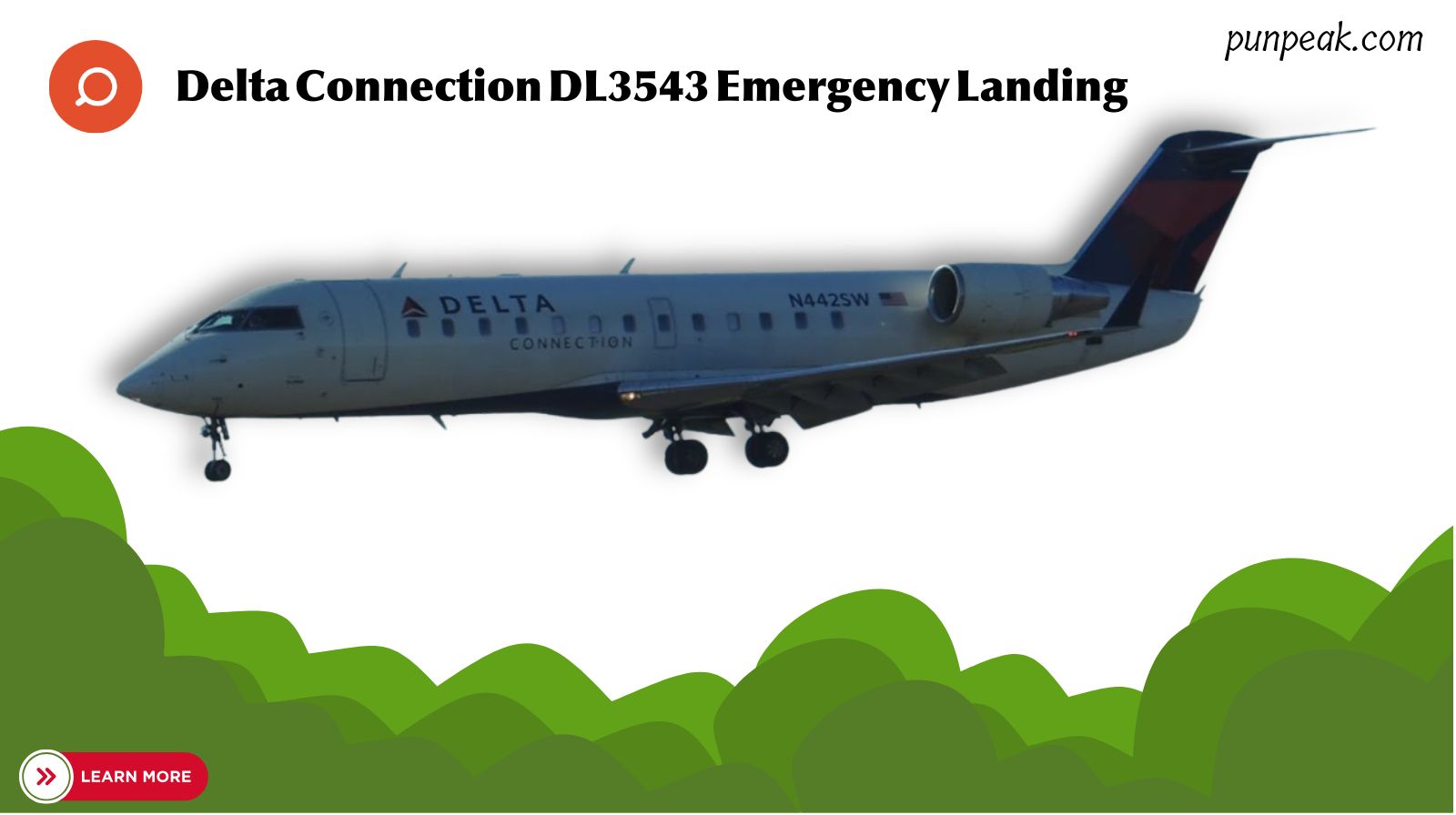
In the world of commercial aviation, every unexpected turn no matter how routine it ends up being catches attention. That was the case with the Delta Connection DL3543 emergency landing in 2025.
Headlines peaked curiosity around aviation safety, technical alerts, and passenger experience. Today, with confirmed reports and aviation patterns in mind, this complete guide breaks down exactly what happened, why it matters, and what you should know as a traveler or aviation enthusiast.
This story isn’t just about a flight turning back. It reveals how modern aviation safety culture works, why pilots act early and decisively, and how layered safeguards protect passengers and crew every single day.
Quick Overview: The DL3543 Emergency Landing in a Snapshot
Here’s the essential, verified summary of the Delta Connection DL3543 emergency landing:
Flight: Delta Connection flight DL3543
Date: July 7, 2025
Operator: Delta Connection regional partner (Endeavor Air)
Aircraft: Embraer E175 regional jet
Departure: Chicago Midway Airport (MDW)
Intended destination: Minneapolis‑St. Paul International Airport (MSP)
What occurred: Crew declared an emergency after a pressurization‑related indication shortly after takeoff.
Outcome: Safe return and precautionary emergency landing with no injuries.
Unlike dramatic aviation stories, this was an instance where aviation systems and aviation safety protocols worked exactly as intended preemptively, reliably, and without harm to people or aircraft.
What Was Delta Connection DL3543?
To understand the event, we need context.
Delta Connection: A Regional Brand With Big Standards
“Delta Connection” is not a separate standalone airline. It’s a regional brand name used by Delta Air Lines for short‑haul flights operated by subsidiary partners such as Endeavor Air and SkyWest.
This matters because regional operations often use smaller aircraft, fly shorter routes, and integrate into larger airline networks but they still adhere to the same Federal Aviation Administration regulations and training standards as mainline flights.
The Flight and Aircraft Details
The aircraft flying DL3543 on July 7, 2025 was an Embraer E175 regional jet a workhorse of short‑haul commercial flights.
Typical E175 Features:
| Detail | Description |
|---|---|
| Model | Embraer E175 |
| Seating | Roughly 76 passengers |
| Operator | Endeavor Air under Delta Connection |
| Role | Regional service |
These jets are widely used across North America and are known for reliability, efficiency, and excellent safety records.
Complete Timeline: How the Incident Unfolded
To grasp the event, a breakdown of the sequence moment by moment paints the clearest picture.
Pre‑Departure and Takeoff
The flight started like any other:
- Aircraft underwent standard pre‑flight inspection.
- Cabin crew completed safety checks.
- Flight crew filed the flight plan and coordinated with ATC.
- Departure from Chicago Midway (MDW) occurred on schedule.
The aircraft entered the initial climb phase, gaining altitude as expected.
Initial Climb & Alert Trigger
Shortly after reaching climb altitude, the cabin pressurization system sensor issued an abnormal indication. It didn’t mean the cabin lost pressure, but it alerted the flight crew that something wasn’t within normal parameters.
Those early warnings matter because pressurization keeps the cabin breathable at high altitudes — and any irregularity warrants immediate evaluation.
Emergency Declaration and Squawk 7700
Once that pressurization‑related indication appeared:
- The flight crew immediately notified Air Traffic Control (ATC).
- They set the transponder to Squawk 7700, the international emergency code signaling the aircraft requires priority handling.
This move isn’t dramatic it simply gives the aircraft priority in communications, routing, and runway procedures.
Controlled Descent and Return
Upon emergency declaration:
- The aircraft initiated a controlled descent.
- ATC cleared the flight for a return approach to MDW.
- Emergency response services were stationed on standby not because of fire or damage, but because pilots declared an emergency.
The Landing and Taxi
The Embraer E175 landed safely back at MDW. Fire crews and emergency vehicles visually inspected the aircraft a standard procedure whenever an emergency is declared.
Passengers disembarked normally, with no injuries or emergency slide deployments reported.
Passengers received assistance with rebooking and accommodation according to airline policies.
What Triggered the Emergency? Cabin Pressurization Explained
The heart of the DL3543 incident was a pressurization‑related indication not a catastrophic failure.
Why Cabin Pressurization Matters
At cruising altitudes (flights often operate above 30,000 feet), air outside the aircraft is too thin for human survival. The cabin pressurization system regulates internal air pressure, keeping passengers comfortable and safe.
The system monitors:
- Airflow volume
- Pressure levels
- Outflow valve positions
- Differential between inside and outside air
A single sensor outside expected limits triggers an alert even if the issue is minor because early detection prevents escalation.
Alerts vs. Actual Failure
Importantly, a pressurization alert does not automatically mean the system failed. It often indicates:
- A faulty sensor reading
- An unexpected valve position
- Slight abnormal fluctuation
In this case, cabin pressure remained stable throughout, and oxygen masks were not deployed.
Why Pressurization Alerts Are Treated Seriously
Pilots don’t take these indications lightly. Aviation prioritizes precaution over reaction.
Even small discrepancies can signal issues that affect:
- Pressure integrity at altitude
- Environmental control systems
- Oxygen regulation
Rather than waiting and risking uncertainty later in the flight, crews land early, inspect, and rule out danger.
This conservative approach is a key part of the aviation safety culture prioritizing human life over schedules or reputations.
What Does an Emergency Declaration Mean in Aviation?
The phrase “emergency landing” can sound frightening to everyday travelers. In aviation, it’s a procedural term, not necessarily a sign of imminent danger.
Emergency ≠ Catastrophe
A pilot may declare an emergency when:
- A caution or warning appears
- A flight deviates from plan
- A medical issue occurs onboard
- Technical anomalies require verification
The goal is to reduce radio congestion, secure priority landing clearance, and ensure emergency resources are staged.
From an ATC standpoint, a declared emergency clears the path, allowing immediate coordination.
Emergency Response Services and Fire Trucks
When a pilot declares an emergency, emergency response crews automatically respond regardless of the severity. Their presence on or near the runway after landing doesn’t mean the aircraft was in danger, only that standard protocol was followed.
This is why passengers often see fire trucks: it’s precautionary, not panic‑driven.
Who Operated Delta Connection Flight DL3543?
Delta Connection flights are operated by regional partners not directly by Delta Air Lines.
For DL3543:
- Operator: Endeavor Air (subsidiary)
- Brand: Delta Connection
- Aircraft: Embraer E175
Even though the plane carried a Delta flight number and branding, a regional carrier crew handled operations.
Why this matters:
Regional operators like Endeavor must meet the same FAA safety oversight, pilot training standards, and airline safety procedures as Delta mainline flights.
Safety rules don’t differ by paint job they align with federal regulations and airline protocols.
What Passengers Experienced Inside the Cabin
From the perspective of someone on board, the DL3543 emergency landing probably felt unsettling at first, but also professionally managed.
Common passenger reports included:
- A slightly earlier than expected descent
- Clear communication from the flight crew
- Calm cabin pressure throughout
- No oxygen mask deployment
- Visible emergency vehicles on the runway after landing
These elements are typical in precautionary emergency responses and demonstrate how crews prioritize passenger safety and reassurance.
Passengers did not experience:
- Rapid decompression
- Structural issues
- Fire or smoke
- Emergency slide deployments
Instead, they witnessed trained professionals doing their job.
What Happens to the Aircraft After an Emergency Landing
Once the aircraft returned and contacted the gate:
- Aircraft was removed from service for inspection.
- Maintenance crews focused on the cabin pressurization system and sensors.
- Engineers verified all system components for normal operation.
- Once technicians cleared the aircraft, it returned to duty.
This type of inspection is routine part of what ensures commercial aviation remains one of the safest transportation modes on Earth.
Aircraft removed from service after an alert is standard. It’s part of the airline safety oversight process.
Why DL3543 Incident Reporting Varies Across Media
One of the confusing aspects of this event was inconsistent reporting across aviation blogs and news sites.
Here’s why that happens:
- Some sites sourced each other instead of official data.
- Flight tracking databases sometimes lack complete regional data.
- Major outlets may not cover precautionary events with no injuries.
- Early reports sometimes misstate details like departure airport or cause.
These factors can create a patchwork of versions but the core reality is clearer when cross‑checked against reliable aviation‑focused summaries and procedural understanding.
How Aviation Safety Culture Shows Through This Event
Instead of viewing the DL3543 incident as a crisis, it’s more accurate to see it as a case study in aviation safety.
Here’s what it truly shows:
- Early detection systems work
- Flight crews make precautionary decisions
- ATC supports priority routing
- Emergency resources are well prepared
- Passengers remain protected
The goal of aviation is prevention over reaction catching minor issues before they become major ones.
This culture is a large part of why commercial aviation remains one of the safest forms of transportation worldwide.
Insider Perspective: Why Pilots Act Early and Decisively
Pilots are trained for precision, calm thinking, and structured emergency response.
When a sensor reading or system alert appears:
- Crew consults quick reference checklists.
- They assess the severity and flight implications.
- Priority is given to ground access.
- Safety always outweighs operational convenience.
This structured safety training isn’t random it’s built into every stage of a pilot’s career.
Key Aviation Terms Explained
To help you follow aviation conversations around events like DL3543, here’s a quick glossary:
- Emergency declaration: A pilot’s announcement to ATC that an aircraft needs priority handling.
- Squawk 7700: A universal transponder code indicating an aircraft emergency.
- Pressurization system: Aircraft system that controls cabin pressure at altitude.
- Controlled descent: A managed reduction in altitude to a safe level for landing.
- ATC (Air Traffic Control): The organization that coordinates aircraft movements in the air and on the ground.
- Maintenance clearance: Authorization for an aircraft to return to service after inspection.
Passenger Rights and Rebooking After a Safety‑Related Disruption
When flights turn back due to safety alerts, airlines typically offer:
- Rebooking on the next available flight
- Meal vouchers (when applicable)
- Accommodation if overnight stay is necessary
- Customer service support for disrupted itineraries
These policies ensure travelers affected by precautionary returns like DL3543 are taken care of.
What This Means for Travelers in 2026
The Delta Connection DL3543 emergency landing should reassure, not alarm, travelers.
Here’s why:
- Systems caught an anomaly early.
- Crew followed procedure.
- Aircraft returned safely.
- No injury occurred.
- Passengers were rebooked and supported.
Far from indicating danger, this incident highlights how the aviation layered safeguards work quietly behind the scenes.
Final Takeaways: Understanding the DL3543 Incident
The Delta Connection DL3543 emergency landing wasn’t a dramatic catastrophe. It was a model example of:
- Conservative aviation response
- Safety‑first decision making
- Structured crew training
- Federal oversight in action
- Passenger safety as the top priority
Rather than fear, the event offers confidence: aviation systems can and do prevent escalation early before risk becomes reality.
FAQs About Delta Connection DL3543 Emergency Landing
What caused the Delta Connection DL3543 emergency landing?
The flight returned due to a pressurization‑related indication detected shortly after takeoff. Crew acted with caution following standard safety protocols.
Was anyone injured during the DL3543 incident?
No. There were no injuries reported among passengers or flight crew.
Did the aircraft lose cabin pressure?
No confirmed cabin pressure loss occurred. The alert was likely tied to a sensor or system indication that required verification on the ground.
Why do pilots declare emergencies for precautionary issues?
Declaring an emergency ensures priority handling by ATC, reduces radio congestion, and positions emergency services immediately. It’s a routine safety measure.
Are Delta Connection flights as safe as mainline Delta flights?
Yes. Regional operations under Delta Connection follow the same FAA safety standards, pilot training requirements, and regulatory oversight.
Why were emergency vehicles visible after landing?
Emergency vehicles automatically position along runways whenever an aircraft declares an emergency even if the situation remains precautionary.
Will the exact cause of the alert be publicly released?
Detailed public reports are usually only issued if the issue meets specific investigation thresholds. If inspections find the issue minor, public release may not occur.
Read more knowledgeable blogs on Pun Peak

Alex Simmonds is the wit behind the words at Alex Simmonds, where laughter takes center stage. With a sharp eye for puns and a playful sense of humor, Alex crafts clever jokes and chuckle-worthy content that tickles funny bones across the web. Whether it’s a quick one-liner or a perfectly timed pun, Alex knows how to turn everyday moments into punchlines. When not writing, you’ll find him chasing giggles, mastering dad jokes, or dreaming up the next viral laugh.