You probably didn’t expect a small lizard to carry profound symbolism. Yet the moment you see a skink dart across warm soil, something shifts. It moves fast. It pauses. It vanishes.
That subtle presence carries layers of meaning.
Across North America, Africa, Asia, Australia, and Mediterranean cultures, the skink lizard has come to represent survival, renewal, adaptability, and grounded awareness.
This guide explores the complete skink lizard spiritual meaning, its biological foundation, psychological symbolism, cultural roots, and modern interpretations in the United States today. You’ll also see how unexpected phrases like skink meaning slang, skink meaning verb, or even what does cullen skink mean in English connect linguistically yet differ symbolically.
Let’s begin where meaning always starts with the animal itself.
What Is a Skink Lizard? Understanding the Animal Behind the Symbolism
Before diving into symbolism, you need to understand the creature.
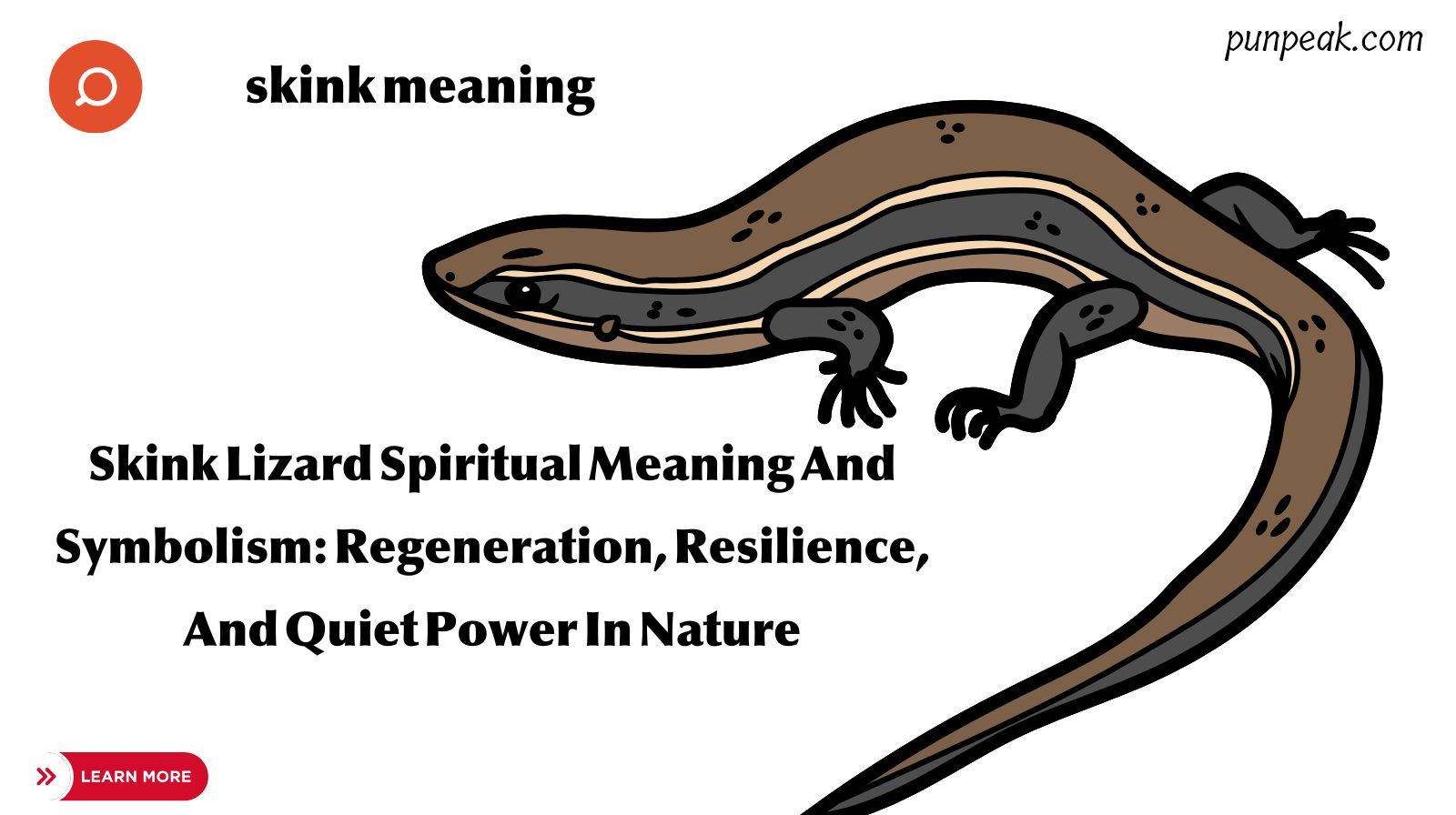
A skink is a type of reptile belonging to the family Scincidae. Scientists recognize over 1,500 species worldwide, making skinks one of the largest lizard families on Earth.
In the United States, especially the South and Midwest regions of USA, the most familiar species include:
- Five-lined Skink
- Broad-headed Skink
These species thrive in woodlands, rocky outcrops, suburban gardens, and forest edges.
Physical Traits That Shape Symbolism
The skink’s appearance isn’t flashy. It doesn’t roar or puff up dramatically. Its strength lies elsewhere.
Key traits include:
- Smooth scales that shine in sunlight
- Short legs and elongated body
- Low posture close to the ground
- Juvenile blue tail coloration in some species
- Ability to perform tail regeneration
That last trait matters most.
Behavioral Traits of Skinks
Skinks survive through precision and restraint.
- Fast movements in short bursts
- Hiding behavior under rocks or bark
- Camouflage blending with soil and leaves
- Dropping tail (autotomy) to escape predators
- Quick thinking under threat
- Subtle presence rather than dominance
You won’t hear a skink coming. You’ll notice it only if you pay attention.
That’s the first symbolic lesson: awareness rewards the observant.
Core Skink Lizard Spiritual Meaning at a Glance
When people ask about skink meaning spiritual, they usually want clarity. Here it is.
| Physical Trait | Spiritual Meaning | Life Application |
|---|---|---|
| Tail regeneration | Renewal and regrowth | Starting over after loss |
| Camouflage | Protection | Guarding personal boundaries |
| Fast movement | Instinct and timing | Acting when necessary |
| Sun basking | Energy recharge | Rest cycles matter |
| Low posture | Grounded awareness | Staying humble |
At its core, the skink lizard symbolism centers on:
- Renewal
- Adaptability
- Self-protection
- Environmental sensitivity
- Quiet survival
- Emotional resilience
- Timing
It doesn’t symbolize aggression. It doesn’t represent dominance. It reflects subtle strength.
Tail Regeneration: The Heart of Skink Spiritual Meaning
If you take nothing else from this guide, remember this:
The skink survives by letting go.
The Science of Autotomy
When threatened, many skinks detach their tails. The severed tail continues twitching, distracting predators while the skink escapes.
This process is called autotomy.
Within weeks or months, a new tail regrows. It may differ slightly in texture or color. Yet it functions.
Biologically, this costs energy. The skink sacrifices part of itself to survive.
Symbolically, that’s powerful.
Spiritual Meaning of Tail Regeneration
The spiritual message is simple and direct:
Sometimes you must release something valuable to protect your future.
That could mean:
- Ending a draining relationship
- Leaving a job that erodes your peace
- Dropping an outdated identity
- Walking away from an argument
Letting go isn’t weakness. It’s strategic survival.
You lose something now so you can live tomorrow.
Psychological Parallel: Trauma and Regrowth
In human terms, this mirrors emotional coping.
You may lose:
- A version of yourself
- A belief system
- A comfort zone
But growth follows loss.
Like the skink’s new tail, you rebuild. Not identical. Stronger in wisdom.
That’s emotional resilience in motion.
Adaptability and Environmental Intelligence
Skinks don’t control their environment. They adjust to it.
They live in forests, deserts, suburbs, and gardens. They bask when needed. They hide when threatened.
This adaptability fuels their symbolism.
Living Between Worlds
Many skinks thrive at environmental edges. Forest meets field. Yard meets wild.
Edges require awareness.
Spiritually, this reflects your ability to:
- Navigate transitions
- Adapt to change
- Remain grounded in shifting circumstances
Life rarely stays stable. Skink energy teaches flexibility without panic.
Timing and Quick Thinking
Notice how a skink moves. Still. Then sudden motion.
That’s timing.
It doesn’t waste energy. It waits. It observes. Then it acts decisively.
Applied spiritually, that means:
- Pause before reacting
- Choose your moment
- Act swiftly when clarity arrives
This isn’t passivity. It’s precision.
Historical Roots of Lizard Symbolism
Skinks rarely appear alone in ancient texts. Instead, broader lizard symbolism dominates cultural memory.
Mediterranean Cultures
In ancient Mediterranean societies, lizards symbolized:
- Fertility
- Rebirth
- Solar energy
Because they basked in sunlight, they became linked to vitality and cyclical renewal.
Africa
Across parts of Africa, lizards appear in oral traditions as:
- Messengers
- Survivors
- Trickster figures
Regeneration traits reinforced themes of rebirth and transformation.
Asia
In certain Asian contexts, small lizards represented:
- Good fortune
- Adaptability
- Earth-bound wisdom
Again, the emphasis falls on survival and environmental awareness.
North America and Indigenous Traditions
In desert societies of the American Southwest, lizard imagery reflects:
- Dream symbolism
- Survival knowledge
- Harmony with land
While not always specifically skinks, the shared traits apply.
It’s important to clarify something:
Skinks are not omens of bad luck.
Fear often comes from misunderstanding reptiles. Symbolically, they reflect earth-based symbolism and coexistence.
Skink Symbolism in the United States Today
In modern American interpretation, especially across suburban neighborhoods, skinks often appear near homes.
Garden sightings happen frequently in warm months.
You might see one near your porch or fence.
Spiritually, that encounter can signal:
- A reflective period
- A need for grounding
- Emotional recalibration
- Boundary reinforcement
Skinks thrive quietly in human spaces without demanding attention.
That’s coexistence in action.
Emotional and Psychological Associations
The skink meaning extends deeply into psychology.
What It Represents Emotionally
- Sensitivity
- Readiness to respond
- Safety and personal space
- Calmness
- Non-aggression
- Inner awareness
If skink symbolism resonates with you, you likely:
- Prefer observation over confrontation
- Recharge alone
- Adapt quietly
- Avoid unnecessary conflict
That isn’t weakness. It’s controlled power.
Shadow Meaning
Every symbol has balance.
Skink energy can tilt toward:
- Avoidance
- Withdrawal
- Emotional detachment
- Hyper-defensiveness
The lesson isn’t to hide forever. It’s to choose visibility wisely.
Interpreting a Skink Encounter
When you see a skink during a stressful period, pause.
Ask yourself:
- What am I holding onto?
- What needs release?
- Where do I need better boundaries?
- Am I reacting too quickly or not at all?
Context shapes meaning.
Repeated sightings often align with transitions.
Career change. Relationship shifts. Identity evolution.
The skink reminds you that survival doesn’t require spectacle.
Skink as a Spirit Animal or Totem
People drawn to skink symbolism often embody:
- Observational learning
- Strategic patience
- Subtle presence
- Emotional coping skills
- Adaptation to environment
Strengths and Challenges
| Strength | Challenge |
|---|---|
| Resilience | Over-isolation |
| Flexibility | Avoiding conflict entirely |
| Timing | Hesitation |
| Self-protection | Emotional walls |
Balance defines healthy skink energy.
Skink Tattoos and Modern Symbolism
You won’t see skinks dominating tattoo studios. Yet those who choose them do so intentionally.
Common themes:
- Minimalist representation
- Detached tail imagery
- Blue-tailed juvenile symbolism
- Quiet survival motifs
People choose skink tattoos to represent:
- Healing after trauma
- Letting go
- Adaptability
- Survival stories
In art and decor, skinks symbolize environmental health and ecological symbol awareness.
Wildlife education platforms often highlight them to teach coexistence.
Misunderstandings About Skinks
Let’s clear myths quickly.
- Not dangerous
- Not aggressive
- Not venomous
- Not deceitful
- Harmless reptile
Fear often attaches to reptiles unfairly.
Skinks prefer avoidance over attack.
Linguistic Curiosity: Other Meanings of “Skink”
Search trends reveal confusion around phrases like:
- skink meaning slang
- skink meaning verb
- skink meaning dog
- skink meaning masque
- skink meaning nyt
- skink meaning in text urban dictionary
Historically, “skink” also functioned as a verb meaning “to pour a drink” in Scots dialect.
Meanwhile, what does cullen skink mean in English refers not to a reptile at all but to a traditional Scottish soup.
Cullen Skink History
Cullen Skink originated in the town of Cullen, Scotland. It’s a smoked haddock chowder.
People often ask:
- Is cullen skink a chowder? Yes.
- Is cullen skink healthy? It contains protein and omega-3 fats though it can be rich in cream.
- Cullen skink recipe? Typically smoked haddock, potatoes, onions, milk or cream.
- Award winning cullen skink recipe? Many chefs adapt traditional bases.
- Cullen skink hairy bikers? Popular British cooking duo featured variations.
- Best cullen skink in cullen? Local Scottish restaurants claim pride in authenticity.
These meanings remain separate from reptile symbolism.
Still, language overlap explains search confusion around skink meaning spiritual.
How Skink Symbolism Has Shifted Over Time
Centuries ago, reptiles inspired fear.
Today, wildlife education reshapes perception.
Environmental awareness movements now frame skinks as indicators of ecological health.
That shift matters.
They’ve moved from overlooked creatures to symbols of coexistence and harmony with land.
Modern spiritual interpretation emphasizes:
- Mindfulness
- Balance
- Regrowth
- Personal boundaries
- Emotional resilience
Skink Symbolism Summary Table
| Category | Meaning |
|---|---|
| Spiritual Core | Renewal |
| Emotional Theme | Emotional resilience |
| Psychological Aspect | Adaptive coping |
| Ecological Role | Environmental sensitivity |
| Cultural Roots | Rebirth symbolism |
| Modern Interpretation | Quiet survival |
Frequently Asked Questions About Skink Spiritual Meaning
What does seeing a skink lizard mean spiritually?
It often signals renewal, adaptability, and boundary awareness. You may need to release something to grow stronger.
Is a skink a good or bad omen?
Neither. Skinks symbolize survival and flexibility. They do not represent bad luck.
Does a skink represent renewal?
Yes. Tail regeneration directly reflects regrowth after loss.
Are skinks associated with danger?
No. They are harmless reptiles that avoid confrontation.
Why do people get skink tattoos?
To symbolize resilience, healing, survival, and personal transformation.
Is skink symbolism religious?
Not specifically. It appears more in earth-based symbolism and spiritual reflection than organized religion.
Final Reflection: The Quiet Strength of the Skink Lizard
The skink lizard spiritual meaning doesn’t shout.
It whispers.
It teaches:
- Let go when necessary.
- Adapt without panic.
- Rest when needed.
- Move with timing.
- Protect your peace.
The skink survives not through dominance but through awareness.
And maybe that’s the deeper lesson.
You don’t need to roar to endure.
Sometimes survival looks like subtle strength moving quietly through the grass.
Read more knowledgeable blogs on Pun Peak

Alex Simmonds is the wit behind the words at Alex Simmonds, where laughter takes center stage. With a sharp eye for puns and a playful sense of humor, Alex crafts clever jokes and chuckle-worthy content that tickles funny bones across the web. Whether it’s a quick one-liner or a perfectly timed pun, Alex knows how to turn everyday moments into punchlines. When not writing, you’ll find him chasing giggles, mastering dad jokes, or dreaming up the next viral laugh.