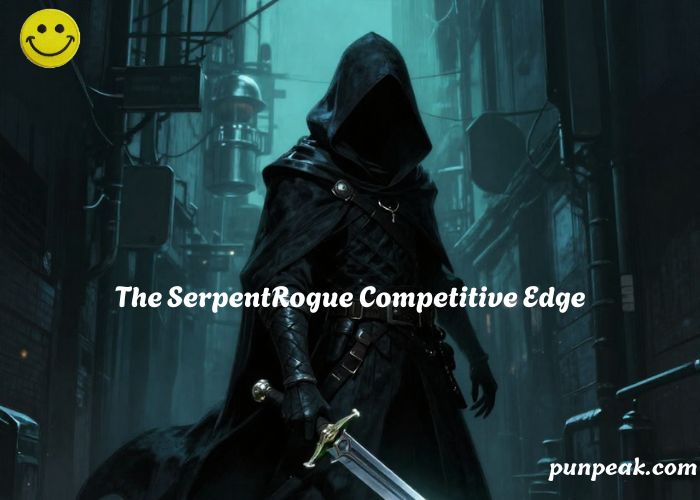
In a market flooded with fast-moving roguelikes and reflex-heavy action titles, The SerpentRogue quietly walks a different path.
It does not chase spectacle. It does not rush mastery. Instead, it builds something slower, denser, and far more enduring. The result is a game whose competitive edge is easy to overlook but difficult to forget once understood.
This article breaks down the serpentrogue competitive edge at a systems level. Not hype. Not vague praise.
Only real mechanics, design intent, and player-facing consequences that explain why The Serpent Rogue stands apart in the action adventure space.
Understanding the Meaning of a Competitive Edge in Game Design
When people talk about a competitive edge in games, they often mean market reach or visual flair. That definition falls short here. In game design, a competitive edge refers to a design advantage that:
- Rewards deeper engagement
- Scales with player understanding
- Remains valuable over time
- Cannot be easily copied without redesigning core systems
In The SerpentRogue game, the edge emerges from system driven gameplay, not from isolated mechanics. Every system reinforces another. Nothing exists in isolation.
This approach creates gameplay depth that compounds instead of flattening.
A Game That Signals Its Difference From the First Hour
From the opening moments, The Serpent Rogue establishes unusual priorities.
- Combat feels restrained
- Tutorials remain minimal
- Progress feels uncertain
- Failure arrives early
Many players mistake this for roughness. It is not. It is intentional minimal guidance design.
The game quietly asks a question:
Will you observe, adapt, and think?
If the answer is no, frustration follows. If yes, the game opens.
This is the first hint of theserpentrogue competitive edge.
Knowledge Based Progression as the True Progression System
Traditional progression systems rely on numbers.
- Higher stats
- Better gear
- Faster attacks
The SerpentRogue replaces that with knowledge based progression.
Knowledge as a Resource
In this game:
- Knowledge replaces grinding
- Understanding replaces leveling
- Observation replaces instruction
This turns player understanding into the most valuable resource.
Each failed experiment adds data. Each successful potion locks in understanding. Nothing learned is ever lost.
This creates experience based progression that persists beyond saves or resets.
Alchemy Systems Built on Cause and Effect
At the heart of the game lies its alchemy system. This is not decorative crafting. It is a full cause and effect system.
How Alchemy Actually Works
- Ingredients carry hidden properties
- Preparation alters outcomes
- Combinations follow internal rules
- Results scale with precision
There are no recipe lists handed to players. Discovery happens through trial and observation learning.
This transforms alchemy into an experimentation system, not a menu.
Why This Matters
Most crafting systems reward collection.
This one rewards comprehension.
Players who understand ingredient behavior gain a knowledge advantage that trivializes later challenges.
That is not imbalance. That is system mastery.
System Driven Gameplay Through Interconnected Mechanics
Nothing in The Serpent Rogue exists alone.
- Alchemy affects combat
- Combat affects corruption
- Corruption affects world stability
- World state affects resources
This is system driven gameplay in its purest form.
Layered Mechanics at Work
| System | Direct Impact | Long-Term Effect |
|---|---|---|
| Alchemy | Potion outcomes | Encounter control |
| Combat | Resource drain | World instability |
| Corruption | Enemy density | Region decay |
| Preparation | Survival chance | Mastery acceleration |
These overlapping systems reward players who think holistically.
A Reactive and Persistent World That Remembers
Unlike static worlds, The SerpentRogue features a persistent world with memory.
World Design Persistence
- Corruption spreads when ignored
- Regions destabilize over time
- Environmental reactions persist
- World state carries consequences
This creates consequence driven gameplay where inaction is also a decision.
Players must practice world state management, not just moment-to-moment survival.
Corruption Spread as a Pressure System
Corruption is not a background threat. It is an active mechanic.
- Left unchecked, it alters enemy behavior
- It reduces safe zones
- It increases risk exponentially
This forces strategic preparation instead of reckless exploration.
The system rewards foresight and punishes complacency. That alone creates a significant player advantage for attentive players.
Why Combat Is Intentionally Simple
Combat in The Serpent Rogue is not about reaction speed.
It is about readability.
- Enemy behavior patterns are clear
- Attacks telegraph consistently
- Positioning matters more than reflex
This removes reflex based challenge from the equation.
Why?
Because combat is a test of preparation, not execution.
Preparation Based Combat as Skill Expression
The real skill ceiling appears before encounters begin.
Pre Encounter Preparation Includes:
- Potion selection
- Inventory balance
- Environmental awareness
- Risk evaluation
Players who plan rarely struggle. Players who rush suffer.
This makes preparation and planning the core expression of mastery.
Enemy Readability and System Transparency
Enemies behave according to rules.
- Status effects matter
- Environmental hazards apply universally
- Positioning alters outcomes
This reinforces system consistency.
When players lose, they know why. When they win, they understand how.
This transparency fuels observation based learning.
Failure as Progression, Not Punishment
Failure is expected. It is productive.
Each failure delivers:
- Data
- Pattern recognition
- Improved decision making
This creates a feedback loop where mistakes accelerate improvement.
Failure as Feedback
| Player Action | Result | Knowledge Gained |
|---|---|---|
| Poor prep | Death | Risk thresholds |
| Wrong potion | Weak outcome | Ingredient behavior |
| Ignored corruption | World decay | Priority management |
This turns learning through failure into a core mechanic.
Minimal Guidance That Respects Player Intelligence
The game avoids over-explaining.
- No hand-holding
- No intrusive pop-ups
- No forced tutorials
This design trusts player intelligence.
Discovery becomes personal. Mastery feels earned.
This approach supports player autonomy and self directed progress.
Trial and Observation Learning in Practice
Players learn by:
- Testing combinations
- Watching outcomes
- Adjusting behavior
This trial and error learning builds deep cognitive engagement.
The learning curve feels steep early, then flattens dramatically as understanding compounds.
Difficulty Curve Through Understanding
The difficulty does not scale down.
Players scale up.
Difficulty Reduction Through Understanding
- Knowledge compounding lowers risk
- Preparation reduces combat pressure
- System familiarity increases efficiency
This creates a satisfying player improvement arc.
The game feels fair because it is consistent.
Emotional Progression Arc and Player Persistence
Emotionally, the experience shifts:
- Confusion
- Frustration
- Curiosity
- Confidence
- Control
This arc rewards player persistence more than mechanical skill.
That emotional payoff forms part of The SerpentRogue competitive edge.
Player Responsibility as a Core Design Pillar
Nothing happens without player input.
- Ignoring corruption has consequences
- Poor planning causes failure
- Rushing creates instability
This reinforces player responsibility.
Success feels earned because the game never intervenes.
Systems Thinking as the Dominant Playstyle
Winning requires:
- Pattern recognition
- Strategic planning
- Resource management
- Logical consistency
This appeals directly to systems oriented players.
Players who enjoy interconnected mechanics thrive.
Who the Game Is Designed to Reward
This is not a mass-appeal action title.
It rewards:
- Curiosity driven players
- Experimentation focused players
- Planning oriented players
- Ambiguity tolerant players
- Deep systems audience
Players seeking instant gratification may struggle.
Those seeking mastery will stay.
Why Many Players Miss the Competitive Edge
Most misunderstandings stem from expectations.
- Expecting fast power growth
- Expecting combat-first design
- Expecting explicit instruction
The game does not meet those expectations because it is not trying to.
Its competitive edge meaning lies beneath the surface.
The True Source of The SerpentRogue Competitive Edge
The edge comes from cohesion.
- Systems reinforce each other
- Knowledge compounds naturally
- Player agency remains intact
Nothing is accidental.
This is design philosophy executed with restraint.
Final Thoughts on Why This Edge Matters Long Term
Flash fades. Understanding lasts.
The SerpentRogue game offers an experience that deepens with time. Its edge is not volume. It is density.
For players willing to think, observe, and prepare, it offers something rare:
A game that grows smarter as you do.
Frequently Asked Questions About The Serpent Rogue
Is The Serpent Rogue a roguelike?
It shares structural elements but emphasizes persistence and understanding over resets.
Why does the game feel hard early on?
Because systems remain opaque until explored.
Does combat ever become the focus?
No. Combat remains secondary to preparation.
Who should play this game?
Players who enjoy mastery, experimentation, and systems thinking.
Read more knowledgeable blogs on Pun Peak

Alex Simmonds is the wit behind the words at Alex Simmonds, where laughter takes center stage. With a sharp eye for puns and a playful sense of humor, Alex crafts clever jokes and chuckle-worthy content that tickles funny bones across the web. Whether it’s a quick one-liner or a perfectly timed pun, Alex knows how to turn everyday moments into punchlines. When not writing, you’ll find him chasing giggles, mastering dad jokes, or dreaming up the next viral laugh.